- TSX-V:UVC
Far-UVC · 216 nm
Human-safe light, engineered for occupied spaces.
70× more powerful
Proprietary, narrowly peaked emission at a fraction of the cost of existing alternatives.
$200B+ TAM
Safe, continuous Far-UVC at commercial scale, for the first time.
The Science
The electromagnetic spectrum spans from low-energy radio waves to high-energy gamma rays. Visible light sits in the middle, followed by higher-energy ultraviolet light. Shorter waves mean higher energy.
Vacuum UV
100–200 nm
Absorbed by air, cannot travel through normal atmosphere.
Far-UVC
200–230 nm
Wavelengths tuned to attenuate before penetrating human tissue, deadly for pathogens.
Conventional UVC
230–280 nm
Germicidal, but damages skin and eyes.
UVB & UVA
280–400 nm
Sunlight, tanning, vitamin D — but still hazardous to skin and eyes with prolonged exposure, and only weakly germicidal compared to UVC.
The “Sweet Spot” · 200–230 nm
01 · vs. Vacuum UV (<200 nm)
Wavelengths shorter than Far-UVC are absorbed by oxygen and nitrogen in the air before they can reach targets. They literally cannot travel through normal atmosphere.
02 · vs. Conventional UVC (>230 nm)
While effective for disinfection, conventional UVC (254 nm) penetrates human skin and eyes, causing damage. Use is strictly controlled and upper-room only.
Human Safety
Far-UVC photons attenuate in the outermost dead-cell layer of human tissue — a size effect: human cell membranes are far thicker than those of bacteria and virions, so the same photons reach pathogens but stop short of living cells.
Traditional germicidal UV (254 nm) is effective at killing pathogens but dangerous to human skin and eyes. This limits its use to unoccupied spaces or carefully controlled upper-room installations where the UV zone is above head height.
Far-UVC operates at shorter wavelengths (200–230 nm) that physically cannot penetrate the outer dead-cell layer of human skin (stratum corneum) or the tear layer of eyes. The photons are absorbed before they reach living cells.
Bacteria and viruses are different. They’re small enough that the same Far-UVC photons can directly reach and destroy their DNA/RNA, no outer protective layer saves them.
254 nm vs 216 nm
254 nm
Conventional UVC
216 nm
SaniLux Far-UVC
Penetrates skin to living cells.
Stopped by the stratum corneum, dead skin cells.
Damages eyes and cornea.
Absorbed by the tear layer.
Strictly controlled, upper-room only.
Safe in occupied spaces.
Requires behavioral compliance.
Zero compliance required.
Far-UVC Dual-Action Mechanism
01
Breaks nucleic-acid bonds. The primary germicidal mechanism shared with conventional UVC.
02
Disrupts viral and bacterial protein structure, a secondary mechanism unique to 200–230 nm Far-UVC, delivering additional kill efficacy beyond DNA damage alone.
The Breakthrough
SaniLux leverages proprietary nanoengineered materials to overcome the fundamental limitations of excimer lamps.
70×
Watts vs milliwatts. Our solid-state technology delivers orders of magnitude more germicidal power than excimer lamps.
1/5
~$1,000 target vs several thousand+. Lower production costs enable deployment at massive scale across new markets.
10×
10,000+ hours vs ~1,000 hours. Minimal maintenance costs over the product lifetime.
Proprietary Nanoengineered Technology
Unlike competitors relying on excimer gas lamps, SaniLux uses novel solid-state materials engineered at the nanoscale.
216 nm Peak
Precise wavelength control without optical filtering.
Narrowly peaked
Clean emission profile, no harmful sidebands.
High Efficiency
More photons per watt of input power.
Scalable
Solid-state production designed for high-volume manufacturing.
Power Output · Excimer vs SaniLux
70× the output.
216 nm
Every photon calibrated to be blocked harmlessly by the protein-rich outer layer of human skin, and to destroy a virus the instant it hits one.
Industry Context
Until now, the industry has struggled to produce efficient Far-UVC light. Two approaches exist, both with fundamental problems.
Krypton-chloride gas discharge
Inefficient Output
Emit unwanted sideband peaks outside the Far-UVC region, presenting both danger to humans and generation of ozone. Expensive optical filters are required to attenuate and mitigate these problems.
Low Performance
Output measured in milliwatts. Disinfection cycles take 1+ hours. Falls far short of Far-UVC's potential.
High Cost
Several thousand dollars per unit. Complex manufacturing. ~1,000 hour lifespan requires frequent bulb replacement.
Aluminum nitride semiconductor
Material Challenges
Requires aluminum nitride (AlN), a notoriously difficult semiconductor substrate to work with.
Timeline: 10–15 Years
Active research but immature technology. Practical realization is at least a decade away.
Uncertain Economics
No clear path to cost-effective manufacturing at scale. May never achieve commercial viability.
SaniLux: The Third Way
Proprietary nanoengineered materials that deliver the promise of Far-UVC today, not in 10–15 years. By emitting at a peak of 216 nm, SaniLux achieves a massive leap in both performance and economic viability.
216 nm
Peak Emission
70×
More Power
10,000+ hr
Lifespan
Now
Not 10+ Years
Competitive Analysis
Core Technology
Excimer
KrCl gas + optical filter
SaniLux
Nanoengineered solid-state
Peak Wavelength
Excimer
222 nm (with sidebands)
SaniLux
216 nm (narrowly peaked)
Power Output
Excimer
Low (mW range)
SaniLux
70× higher (W range)
Disinfection Speed
Excimer
1+ hours per cycle
SaniLux
<1 minute
Unit Cost
Excimer
Several thousand+
SaniLux
~$1,000 (target)
Production at Scale
Excimer
High (complex filtering)
SaniLux
Low (solid-state)
Lifespan
Excimer
~1,000 hours
SaniLux
10,000+ hours
Maintenance
Excimer
High (bulb replacement)
SaniLux
Minimal (solid-state)
Form Factor
Excimer
Fixed, bulky
SaniLux
Flexible (bulb, panel, portable)
IP Dependency
Excimer
Licensed from a single supplier
SaniLux
No licensing dependency
Aviation Market
Excimer
Cannot serve (too slow/expensive)
SaniLux
Enables entire market
Transit Market
Excimer
Inadequate power density
SaniLux
Real-time disinfection
We own our technology. Our nanoengineered approach has zero licensing dependencies and enables market creation that excimer technology physically cannot achieve.
Market Creation
Excimer technology cannot serve these markets due to fundamental physics and economics limitations. Only SaniLux enables market creation at scale.
Category-Creating Opportunity
$200B
Annual Disease Burden
Current UVC solutions cannot work in occupied aircraft cabins. SaniLux enables continuous disinfection during flight. Blueprint Biosecurity documents 1,000% annual ROI for aviation deployment.
Why Excimer Cannot Serve This Market
Too slow (1+ hour cycles), too expensive at fleet scale, inadequate power density for rapid air exchange in pressurized cabins.
Global Transportation Network
65B+
Rides per Year
NEW
Market Creation
Buses, trains, subways serve billions of passengers annually. Impossible to protect with 254 nm UVC. SaniLux enables silent, continuous operation while passengers ride.
Why Excimer Cannot Serve This Market
Power density too low for real-time disinfection. Transit vehicles need instant-on capability, not 1+ hour cycles. Maintenance costs prohibitive at fleet scale.
Superior to Upper-Room GUV
$3.2B+
Addressable Market
184
eACH vs 20 for ORs
Far-UVC delivers 184 equivalent air changes per hour in operating rooms versus 20 eACH for traditional upper-room GUV. Continuous disinfection while surgeons operate.
The SaniLux Advantage
9× better performance than upper-room GUV. Direct air and surface disinfection in the surgical field. No upper-room zone constraints.
Absenteeism Reduction = ROI
30–290×
Benefit-Cost Ratio
15,500+
Canadian Schools
Blueprint Biosecurity study documents 30–290× benefit-cost ratio for Far-UVC deployment. Reduced sick days = direct productivity ROI for employers and schools.
Why Scale Requires SaniLux Economics
At several-thousand-per-unit pricing, excimer doesn't pencil for schools or SMBs. At ~$1,000, Far-UVC becomes accessible to every classroom, office, and retail space.
Product Roadmap
Our nanoengineered technology enables flexible deployment across multiple form factors for different applications.
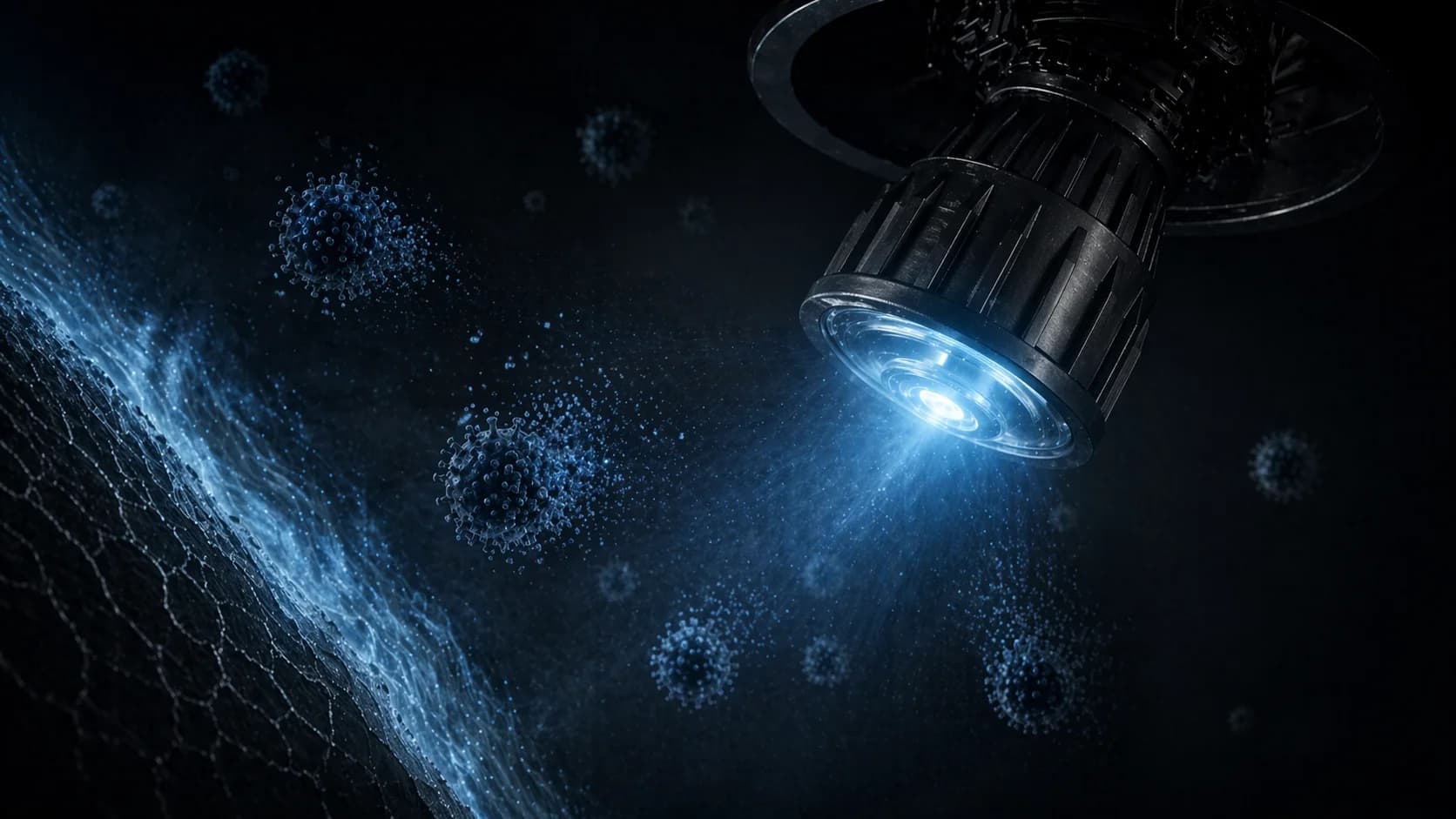
Q3 2027
Vacuum Tube (Current Gen) Multiple retrofit form factors built around our current-gen vacuum-tube architecture, drop-in compatible with existing commercial fixtures.
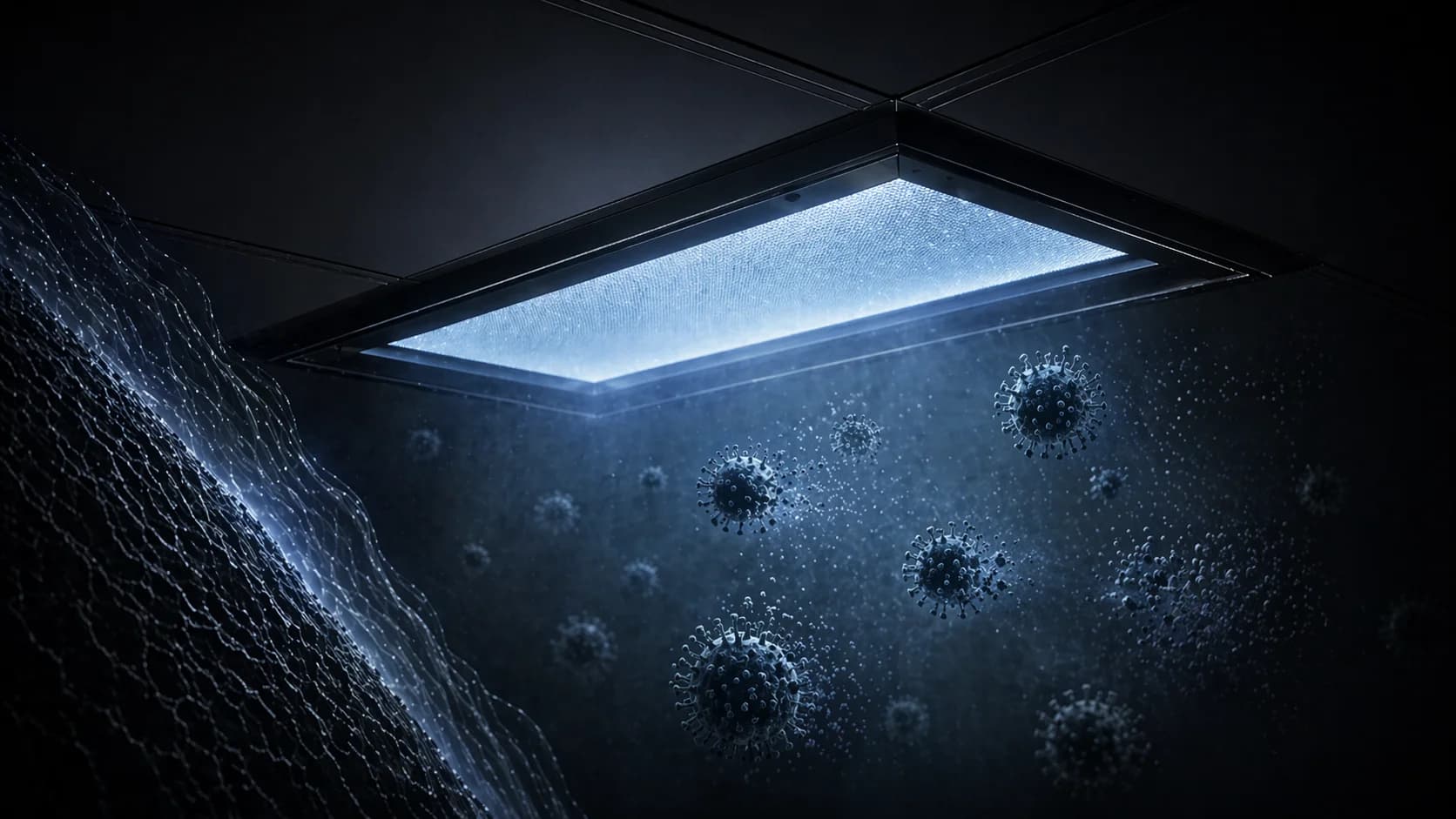
Q1 2028
Solid-State (Next Gen) Next-generation solid-state Far-UVC unlocks LED-like flexibility — panels, strips, embedded modules and bespoke geometries beyond the vacuum-tube envelope.
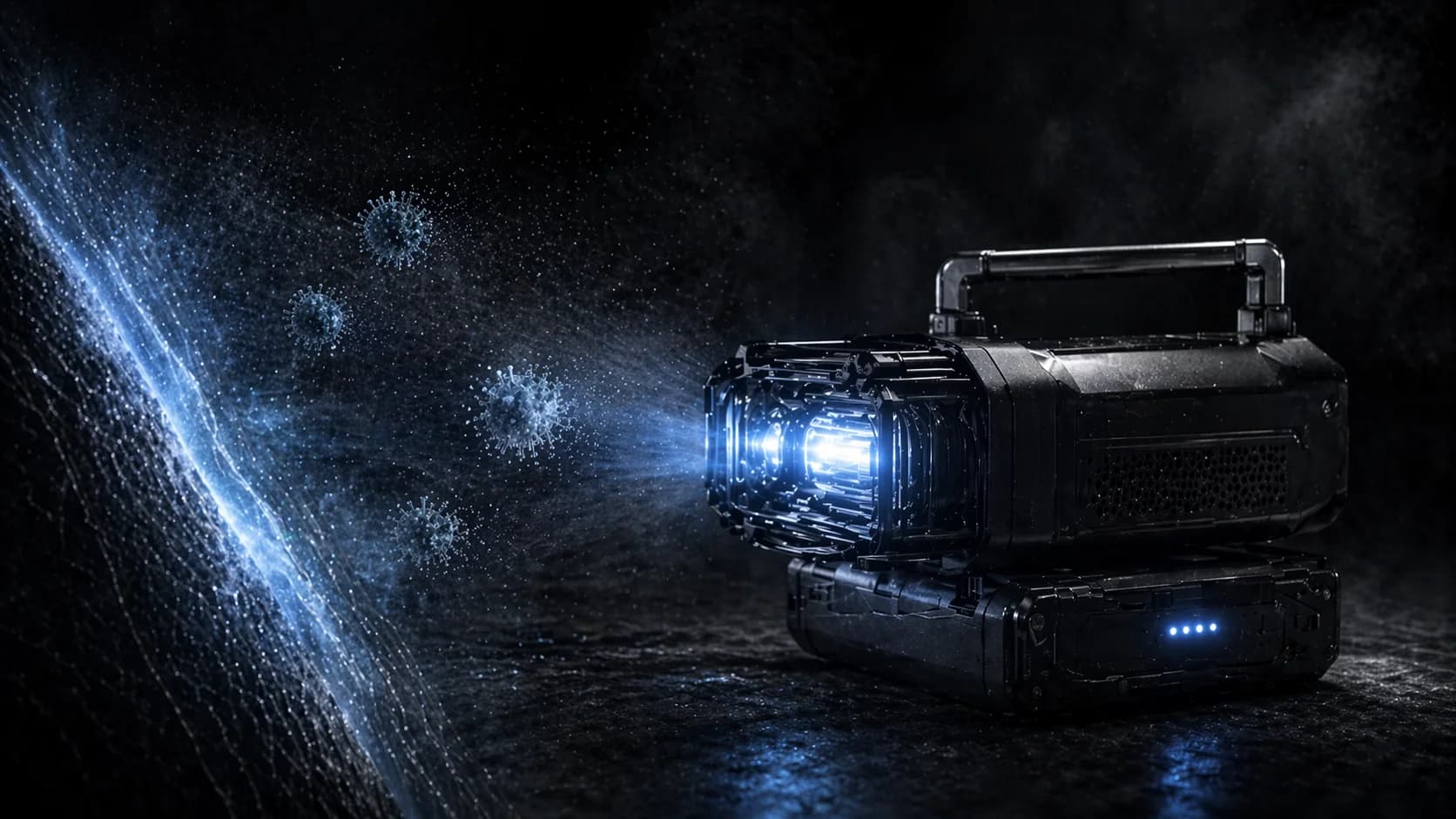
Q3 2028
Portable & Mobile Battery-powered portable units for temporary deployments, events, transit and emergency response.
Common across all form factors
Instant On
No warm-up time required.
Silent Operation
No fans or moving parts.
IoT Connected
Remote monitoring & control.
Zero Maintenance
10,000+ hour lifespan.
Intellectual Property
SaniLux is built on a foundational Far-UVC patent that we now own and are actively expanding. Unlike excimer competitors who all license from USHIO, we own our core technology outright with zero dependencies.
1
SaniLux Patent (expanding)
Zero
License Dependencies
Owned
Core Technology
Novel
Nanoengineered
Competitive Moats
Novel nanoengineered materials not dependent on excimer gas or USHIO licensing.
Foundational Far-UVC patent owned outright, with an actively expanding patent family around it.
We own and develop the core Far-UVC technology in-house, with zero licensing exposure to third parties.
Only technology capable of serving aviation and transit markets at scale.
Third-Party Validation
Independent analysis of Far-UVC market opportunity and return on investment from the Blueprint Biosecurity Coalition.
Far-UVC represents one of the most promising technologies for pandemic preparedness and endemic disease reduction. The benefit-cost ratios documented across applications are exceptional.
Blueprint Biosecurity Coalition Report
$200B+
Addressable Value Creation
30–290×
Benefit-Cost Ratio
1,000%
Aviation Annual ROI
Category
Creating Technology
Strategic Validation

Chris Anderson
TED Curator

Rob Reid
After On Podcast
Blueprint Coalition
Biosecurity Think Tank
